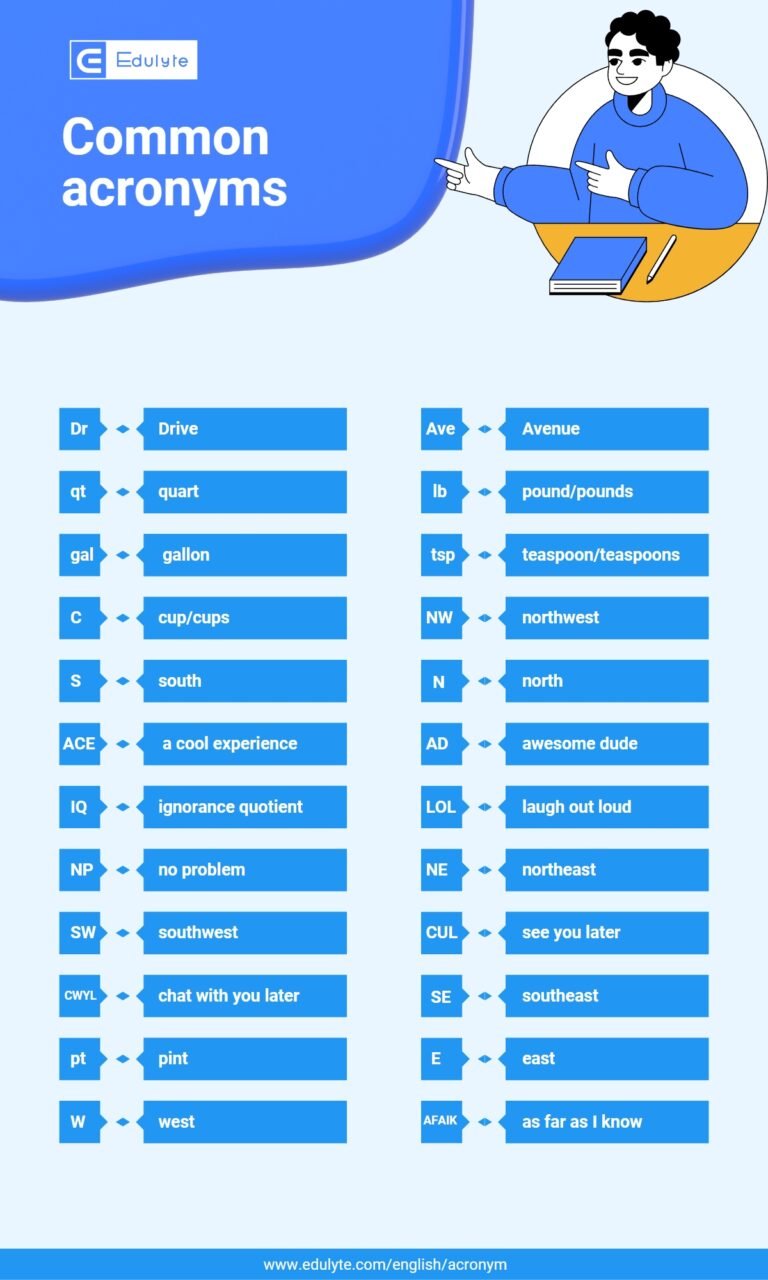
In today's fast-paced world, clarity, memorability, and conciseness aren't just good ideas—they're necessities. From launching a new startup to defining a complex project or simply making a presentation stick, your ability to communicate effectively often hinges on your choice of words. That's where knowing how to effectively use acronym generators becomes an invaluable skill, transforming cumbersome phrases into punchy, unforgettable identifiers. Think of these AI-powered tools not just as simple word choppers, but as creative partners in your quest for smarter naming.
At a Glance: Your Acronym Generator Playbook
- What it does: Instantly converts long phrases into concise, catchy acronyms using AI.
- Why you need it: Streamlines branding, project naming, and communication; boosts creative brainstorming.
- How to start: Input a clear, specific phrase or concept into the generator.
- Key trick: Experiment with variations of your input and customize options for best results.
- Best for: Brand names, project titles, marketing slogans, technical terms, and presentations.
- Remember: Acronyms are starting points; always refine and iterate for perfect fit.
Beyond the Buzzword: What an AI Acronym Generator Truly Is
You've likely encountered acronyms everywhere, from NASA to ASAP. They're linguistic shortcuts designed to simplify and brand. But manually crafting a good one—one that's catchy, relevant, and not already taken—can be a surprisingly difficult task. This is where an AI Acronym Generator steps in.
Imagine a tool that doesn't just grab the first letter of each word. Instead, it leverages advanced artificial intelligence to analyze your input phrase, understand its context, and suggest not just any acronym, but ones that are meaningful, pronounceable, and often, quite clever. It's like having a dedicated brainstorming assistant that can sift through countless linguistic permutations in seconds, presenting you with a curated list of options. This isn't just about abbreviation; it's about intelligent summarization and creative ideation, ensuring your chosen name or title resonates.
Your Step-by-Step Guide to Acronym Generation
Ready to turn your lengthy concepts into memorable identifiers? Here’s a practical walkthrough on how to leverage an AI Acronym Generator effectively.
1. Pinpoint Your Core Idea: The Input Phrase
The journey begins with your input. Whether it's "Sustainable Urban Development Initiative" or "Customer Relationship Management System," clarity is king.
- Be Specific: Don't just type "project." Type "Project Alpha for Global Outreach." The more context you provide, the better the AI can understand your intent.
- Use Keywords: Incorporate the most important terms. If your focus is "Artificial Intelligence in Education," make sure those keywords are present and prominent.
- Keep it Focused: While AI is smart, a rambling paragraph won't yield optimal results. Aim for a concise phrase that encapsulates your core concept.
2. Fine-Tune Your Search: Customization Options
Many generators offer powerful customization features that can dramatically improve your results. Don't skip these!
- Language Preference: English is often the default, but if you're working in other languages, check for this option.
- Tone: Some advanced generators might allow you to specify a desired tone (e.g., formal, playful, technical). This helps the AI select words that align with your brand voice.
- Additional Keywords: Have a specific word you want included or emphasized? Use this field. Conversely, some tools allow you to exclude words.
- Desired Number of Acronyms: Start with a healthy batch, say 5-10, to give yourself options, then narrow down.
3. Unleash the AI: Generating Your Acronyms
Once your input is perfect and options are set, click that "Generate Acronym" button. This is where the magic happens. In an instant, the AI processes your request, drawing on its vast linguistic understanding to produce a range of suggestions.
4. The Human Touch: Reviewing and Selecting
The AI has done its part; now it's your turn. Scrutinize the generated acronyms with a critical eye.
- Relevance: Does it still capture the essence of your original phrase?
- Memorability: Is it easy to remember? Does it roll off the tongue?
- Pronounceability: Can people easily say it? Avoid awkward letter combinations.
- Uniqueness: Is it too similar to existing brands or common acronyms in your industry? A quick search can help here.
- Meaning: Does it inadvertently spell out something negative or silly?
5. Iteration is Key: Refining and Experimenting
Rarely does the perfect acronym appear on the first try. This is where the iterative nature of these tools shines.
- Generate Again: If the first batch isn't quite right, simply click "Generate Acronym" again for a fresh set of ideas.
- Rephrase Your Input: Slight variations in your original phrase can lead to surprisingly different results. Try synonyms, reorder words, or simplify components. For example, instead of "Global Energy Efficiency Alliance," try "Worldwide Energy Conservation Coalition."
- Fine-Tune Feature: Some sophisticated generators allow you to lock certain letters or manually adjust individual words within a generated acronym, offering unparalleled control. This is particularly useful if you have a specific letter sequence in mind but need the AI to fill in the gaps. For more targeted acronym creation, especially when you have a specific letter sequence in mind, you might want to check out an acronym generator from letters directly.
6. The Final Step: Applying Your Chosen Acronym
Once you've landed on the perfect acronym, simply copy it and integrate it into your project, presentation, or brand identity. Celebrate your newfound clarity!
Unlocking the Power: Key Features & Benefits in Detail
Acronym generators aren't just simple letter-grabbers; they're sophisticated tools designed with specific capabilities to enhance your creative process.
- AI-Powered Word Selection: This is the core differentiator. Unlike basic tools, AI algorithms analyze the context and semantic meaning of your input. This allows them to suggest words that not only fit the acronym structure but also align with the overall message, often leading to more meaningful and impactful results.
- Customizable Input Options: As discussed, the ability to tailor results by inputting specific keywords, preferred tone, or even words to avoid, ensures the output is highly relevant to your needs. This moves beyond generic suggestions to truly bespoke naming ideas.
- Multiple Suggestions: A good generator never gives you just one option. Providing a variety of acronym choices sparks further inspiration and gives you a broader pool from which to select the most suitable candidate.
- Industry-Specific Acronyms: One of the AI's remarkable capabilities is its understanding of sector-specific terminology. If you input a phrase related to healthcare, finance, or technology, the AI can draw on relevant vocabulary, ensuring the generated acronyms resonate within your specific industry.
- Creative Brainstorming Aid: Think of it as a creative spark plug. When you're stuck on a name or title, the generator can provide fresh perspectives, helping you break through creative blocks for branding, project naming, and content creation. It's an excellent way to kickstart your imagination when creating catchy brand names feels like a daunting task.
- Easy-to-Use Interface: The best tools are intuitive. They offer a user-friendly experience, allowing you to focus on your creative output rather than navigating complex software. This accessibility ensures even non-tech-savvy users can harness their power.
Mastering the Art: Best Practices for Optimal Results
While the generator handles the heavy lifting, your strategic input and approach will determine the quality of the output.
- Keep your input phrase short and clear: This is paramount. A concise, well-defined phrase leads to stronger, more focused acronym suggestions. Avoid unnecessary conjunctions or vague descriptors. For instance, "Advanced Technology for Renewable Energy Systems" is better than "A system that uses really good, cutting-edge technology for creating renewable energy."
- Experiment with different variations of your phrase: Don't settle for the first set of results. Play with synonyms, rearrange words, or try slightly different conceptual angles. This iterative process often uncovers hidden gems. Sometimes, a subtle rephrasing can unlock a truly brilliant acronym. This iterative process also helps you better understand the nuances of the psychology of memorable words and how they impact perception.
- Remember that generated acronyms can serve as inspiration: Think of the generator as a muse, not a dictator. You can always refine, tweak, or combine elements from different suggestions. The AI provides a starting point; your creativity polishes it into a masterpiece. Don't be afraid to take an AI suggestion and slightly modify it to make it even more perfect.
Beyond the Basics: Where to Apply Your Brilliant Acronyms
The utility of a well-crafted acronym extends across numerous domains. Here are some prime applications:
- Brand Names (Company or Product): A punchy acronym can make your brand instantly recognizable and memorable. Think IBM, NASA, LEGO. It simplifies complex offerings into digestible identifiers.
- Project Titles: For internal projects, large initiatives, or collaborative ventures, an acronym provides a professional, easy-to-reference name that reduces ambiguity and streamlines communication.
- Campaign Slogans or Marketing Initiatives: Acronyms can turn a long campaign message into a catchy, repeatable phrase that sticks with your audience. For example, "SWOT" analysis is an acronym that summarizes a whole strategic framework.
- Organization Names: Non-profits, government agencies, or new departments can benefit from an acronym that encapsulates their mission and is easy to recall.
- Course Titles or Educational Materials: Simplifying complex topics with an acronym can aid retention and make learning materials more accessible.
- Presentations: Acronyms help structure content, introduce key concepts, and make slide decks more engaging and memorable for the audience.
- Simplifying Technical Terms: In fields laden with jargon, an acronym can serve as a shorthand for complex concepts, making them more approachable for a wider audience. This is particularly useful when you're looking for SEO considerations for naming a technical product or service.
Common Pitfalls & How to Avoid Them
Even with the best tools, you can run into snags. Here's how to navigate common challenges:
- Acronym Spells Out Something Undesirable: This is perhaps the biggest danger. Always, always check what your proposed acronym spells out or sounds like, especially across different cultures or slang contexts. A quick search of the acronym online can save you from a major branding embarrassment.
- Too Generic or Easily Confused: If your acronym is too common (e.g., "GET"), it won't stand out. Use the generator to find unique combinations, and always do a quick search to see if it's already in heavy use within your industry.
- Hard to Pronounce or Unnatural Flow: Acronyms that are difficult to say or don't have a natural rhythm will hinder memorability. Test it out loud. Ask others to say it. If they stumble, it's a red flag.
- Losing the Core Meaning: Sometimes, in the pursuit of a catchy acronym, the connection to the original phrase can be lost. Ensure your chosen acronym still hints at or clearly represents the underlying concept.
- Over-reliance on the First Suggestion: The AI is a brainstorming tool, not a decision-maker. Don't just pick the first decent option. Explore multiple suggestions, iterate, and apply your human judgment to find the best fit. Remember, avoiding common branding mistakes involves careful consideration and iteration.
Refining Your Choices: What Makes a Good Acronym?
While "good" can be subjective, certain characteristics consistently contribute to an effective acronym:
- Memorability: It's easy to remember and recall. This often comes from being pronounceable and unique.
- Relevance: It clearly relates back to the original concept or brand. There should be a logical connection.
- Pronounceability: It can be spoken easily, either as a word (e.g., NASA) or as individual letters (e.g., FBI). Hard-to-pronounce acronyms are hard to spread.
- Uniqueness: It stands out from the crowd and doesn't get confused with existing entities, especially within your industry.
- Positive Connotation: It evokes a positive or neutral feeling, avoiding any accidental negative meanings or awkward phrasing.
- Simplicity: It's not overly long or complex. The goal is simplification, not further complication.
Frequently Asked Questions About Acronym Generators
Q: Are AI Acronym Generators truly better than manual brainstorming?
A: Yes, in many ways. While human creativity is essential, AI tools can process vast amounts of linguistic data, identify patterns, and generate a wider, more diverse array of options in seconds that a human might not conceive of. They act as powerful accelerators for your brainstorming efforts.
Q: Can I use generated acronyms for official company names or trademarks?
A: Absolutely! Many companies use acronyms for their official names. However, always perform thorough legal checks (trademark searches, domain availability) before finalizing any name, whether AI-generated or not. The generator is a creative tool, not a legal advisor.
Q: What if the generator doesn't give me any good options?
A: This usually means your input phrase needs refinement. Try rephrasing your core idea, using synonyms, or breaking down a very long concept into smaller, more focused phrases. Experiment with customization options, like including specific keywords, to guide the AI. Sometimes, even other AI brainstorming tools might be needed to get a fresh perspective on your initial concept.
Q: How do AI acronym generators avoid creating offensive words?
A: Reputable AI generators are typically trained on vast datasets and incorporate filters to avoid generating profane, offensive, or nonsensical word combinations. However, language is complex and nuanced. It's always crucial for you, the human user, to review the results and ensure they are appropriate for your context and audience.
Naming with Confidence: Your Next Steps
You now have a robust understanding of how to effectively use acronym generators to your advantage. These intelligent tools are not replacements for human ingenuity but powerful complements, offering a vast array of creative possibilities at your fingertips. By following the steps outlined, leveraging the features, and applying best practices, you can streamline your naming process, enhance your brand's memorability, and communicate with greater impact.
Your mission now is to experiment. Take that project title you've been struggling with, or that complex concept you need to simplify, and run it through a generator. Play with the options, refine your input, and discover how quickly you can move from a vague idea to a clear, concise, and captivating acronym. The world of smarter naming is waiting.